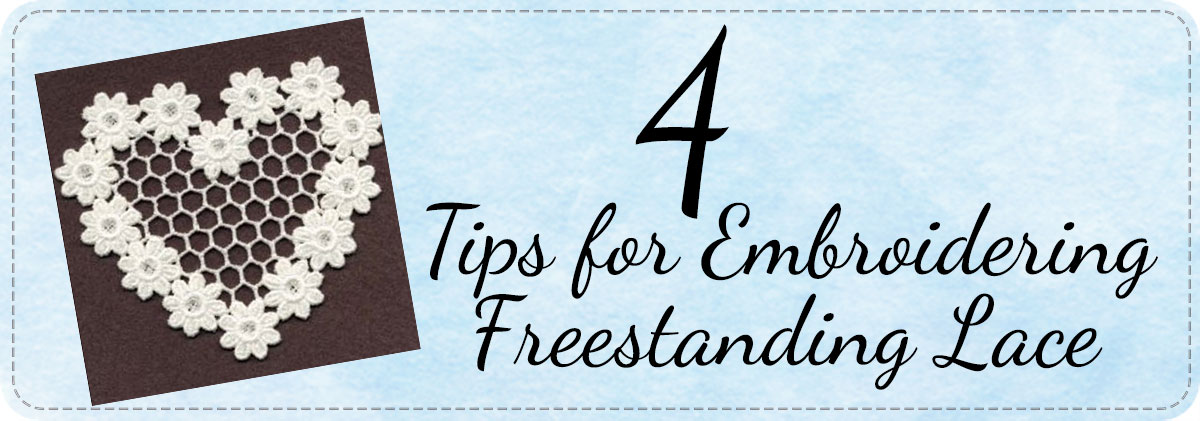
Freestanding lace is gorgeous but may be a bit scary unless you know these tips!
Use a Fabric-type Water-soluble Stabilizer
One of the frustrations of embroidering freestanding lace is that the stabilizer tears so easily. That is especially true when using film-type water-soluble stabilizer (WSS). Although you can add a stabilizer band aid to patch holes, using a fabric-type WSS, like Vilene, holds up better when embroidering high-stitch-count designs like FSL.
Some designs may require two layers which is no problem since they rinse away.
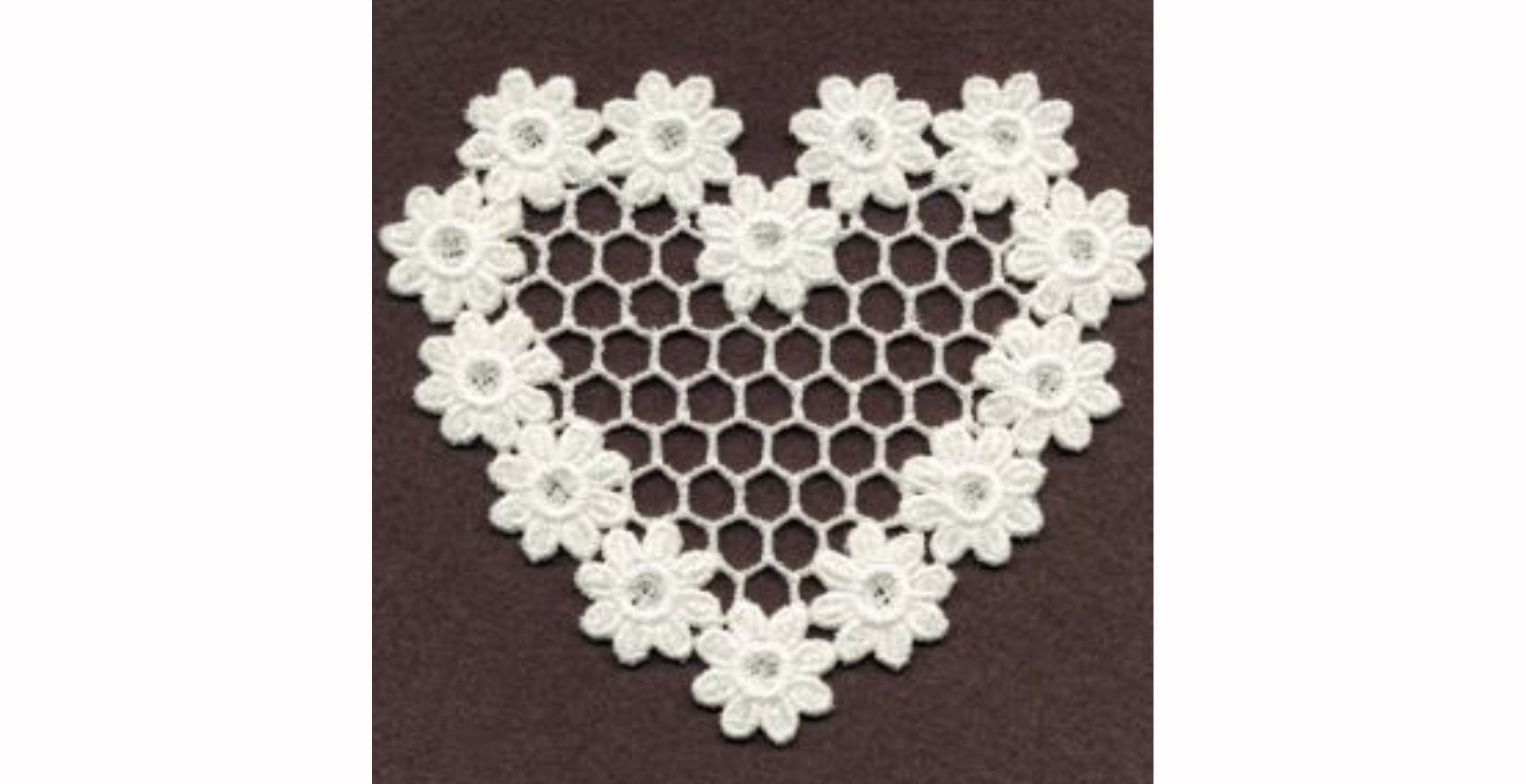
FSL Sweet Hearts from Ace Points Embroidery
Eliminate Stabilizer Wrinkles
WSS fabric-type stabilizers stretch more than other stabilizers, so it is important that they are taut in the hoop. Since there is no fabric backing, FSL stitches are built upon one another to make sure each stitch is secured to others. If not, the entire design can unravel.
I purchase my WSS by the bolt and it is often wrinkled, making for an uneven stitching surface that will play havoc with your stitch registration. Did you know that you can iron WSS to take out any slack? See how it is done here.
Use the Same Thread in the Bobbin
Typically, we use a lighter weight bobbin thread in machine embroidery (60 wt) but with FSL, you use the same type of bobbin thread as that with which you are stitching (40 wt). FSL designs are digitized that way and using the same weight thread will keep even tensions front and back.
Slow Down the Machine
While we may want to stitch pedal-to-the-metal, FSL embroidery is more intricate than fill stitching, quilting, or applique. Especially when stitching on delicate stabilizers, I like to slow my machine down to lessen thread break and stabilizer tear issues.