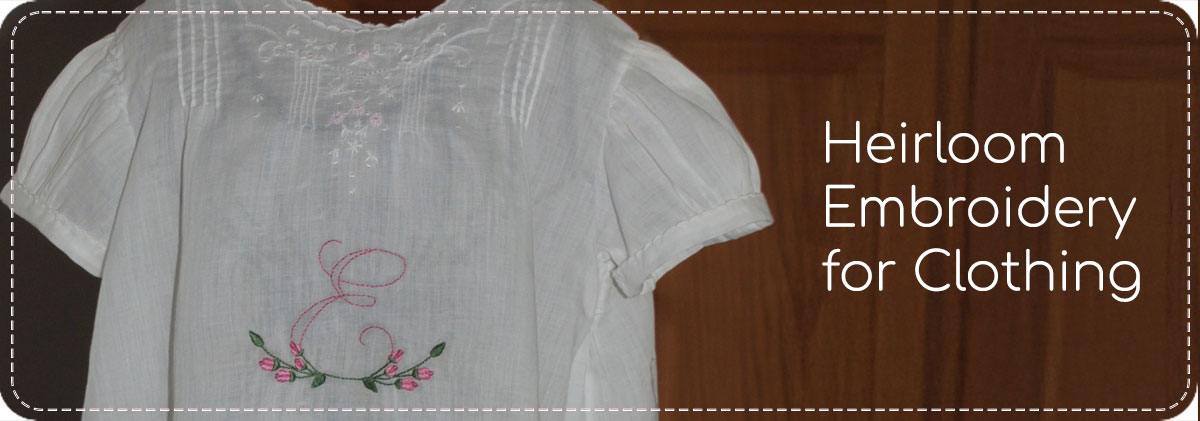
Used to create delicate heirloom clothing and linens for the wealthy, fine French hand-sewing was all the rage in the last half of the 1800s. A century later, computerized embroidery machines made short work of techniques like Madeira applique, shadow work, cutwork, lace making, monogramming, and hemstitching, that once took weeks to complete by hand. Heirloom style is just as popular today for decorating christening gowns, quilts, and linens.
Embroidering Heirloom Clothing and Linens
Shadow work is created by adding a layer of extra fabric or embroidery for dimension. Fabric may be a different color than the base or in the case of this shadow work tutorial, colored thread is embroidered on the stabilizer beneath the fabric. The technique is typically recommended for fine fabric projects such as blouses, dresses, christening gowns, or scarves.
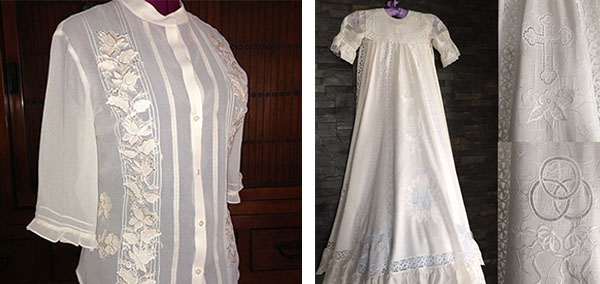
Shadow Work Blouse and Micks Heirloom Design, both from Alinaline.
Best Fabrics and Designs for Heirloom Embroidery
Fabrics that work best are lightweight, tightly woven natural fibers such as batiste, lawn, organdy, voile, and handkerchief linen. Dainty florals, redwork/linework, light monograms and other light-stitch-count designs are good choices. Designs with large areas of fill stitching overpower delicate linens. For authenticity, choose light and dainty florals, redwork, and monograms.
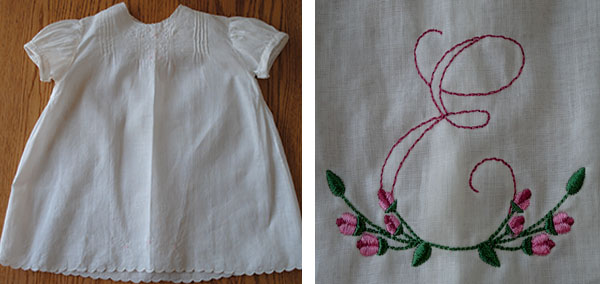
Antique dress with heirloom machine embroidery.
Thread, Needle, and Stabilizer Choices for Heirloom Embroidery
Rayon, silk, and polyester will add some shine while cotton displays a more traditional matte. Use the smallest needle size possible and test on a similar fabric. Stitch white on white for antique appeal.
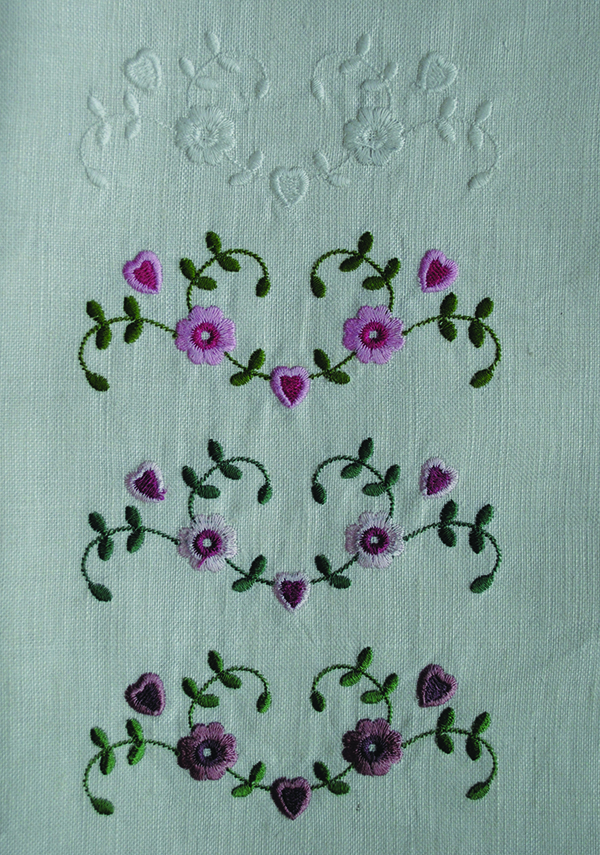
Threads, from top to bottom: 60 wt. cotton, 50 wt. cotton, 50 wt. silk, 40 wt. rayon.
For the most part, avoid using tear-away stabilizers with heirloom embroidery as removing it can distort stitching on delicate fabrics. Fabric-type wash-aways work well with light stitch count designs (I used two layers of Vilene fabric-type wash-away stabilizer on this antique dress monogram) and you will often float the fabric in the hoop to prevent distorting delicate fabrics.