Steeped in history and culture, many beautiful embroidery designs have their roots in folk art.
Originally stitched by hand, folk art embroidery designs are typically specific to communities and geographic areas. Items used in everyday tasks, as well as home furnishings, were often decorated to make them more appealing while work was completed.
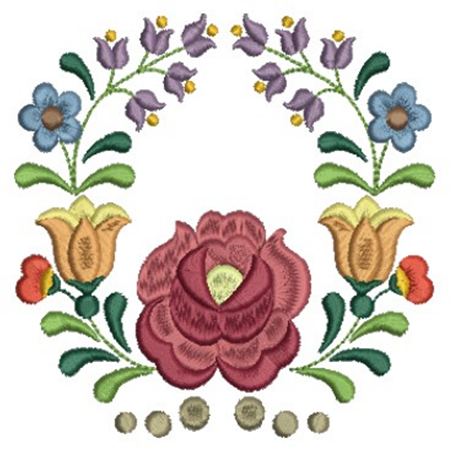
Folk Art Flowers from Allstitch
The techniques for these regional styles have been passed down through the generations in various forms from painting and carving to embroidery.
Hardanger
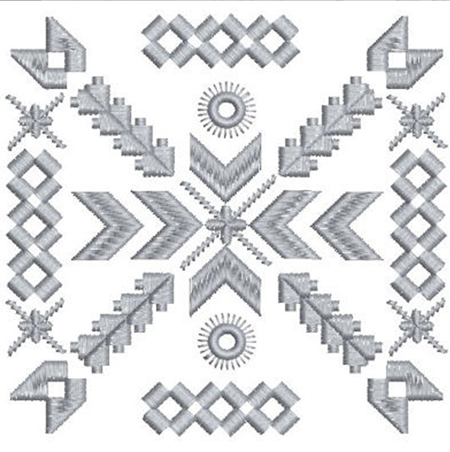
Hardanger 2 from Secrets of Embroidery
Believed to have originated from ancient Persia and Asia, modern day Hardanger embroidery is a combination of embroidery and geometric cutwork. As it spread across Europe, Norweigan drawn work was stitched on open weave fabrics like linen. Patterns varied from family to family and village to village, but the most popular was from the mountains along the southwestern coast of Norway at the head of the Hardanger fjord.
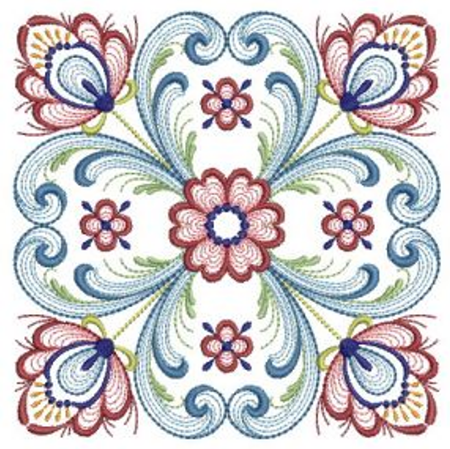
Rosemaling Quilt Blocks from Ace Points Embroidery
Another traditional Norwegian folk style, rosemaling, also known as rose painting, featured lovely floral motifs. Ironically, most of the florals were not roses.
Hungarian Embroidery
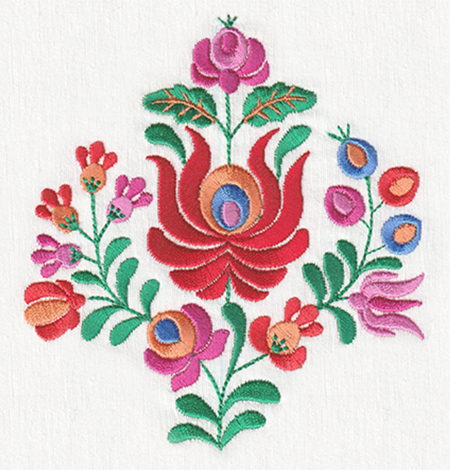
Hungarian Matyo from Enigma Embroidery
The Mayto were a group from Mayto Land in Northern Hungary. They developed this distinctive embroidery, focusing on roses, which is often seen in folk dancing and traditional celebrations.
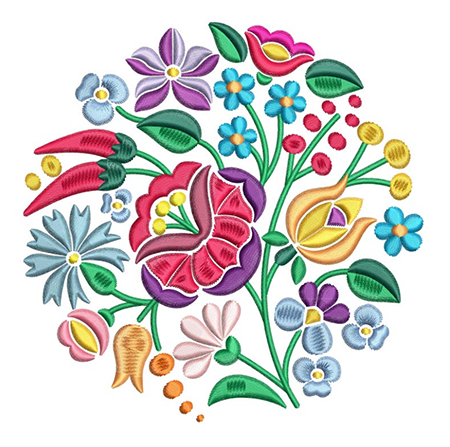
Kaloscai Floral Folk 4 Set from Stitch Emporium
The other distinctive form of Hungarian embroidery is Kalocsa, a combination of rich florals and eyelets.
German Embroidery
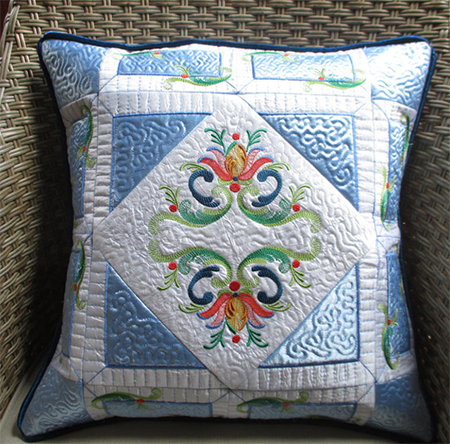
Bauernmalerei Quilt Blocks from MarLena Embroidery
Associated with Germany, Austria, and Switzerland, Bauernmalerei is more often recognized as Bavarian Folk Art. As with other folk embroidery, the styles differed according to geographic areas and era in which they were created.