Vintage embroidery is so much easier when you use modern-day machines. The thread that you use can make a difference in how the end product looks, but how do you decide which one is best?
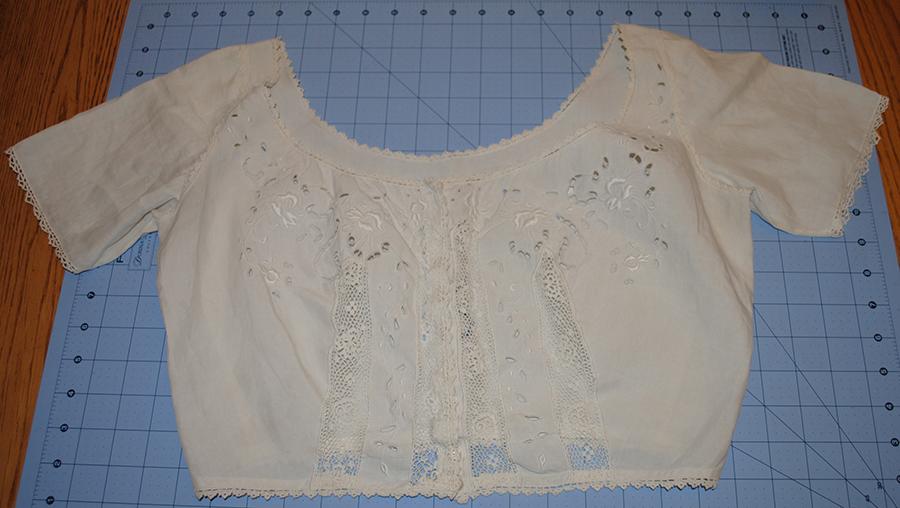
Traditionally, heirloom garments were stitched in cotton thread as a white-on-white or tone-on-tone theme. This French bodice is part of a 1907 bridal trousseau. Even though the thread and lace colors match the fabric, the embroidery, especially the satin stitching stands out.

Threads, from top to bottom: 60 wt. cotton, 50 wt. silk, 40 wt. rayon.
Thread Types
Cotton thread has more of a matte finish, unlike today’s polyesters and rayons. It is an authentic choice when stitching vintage designs.
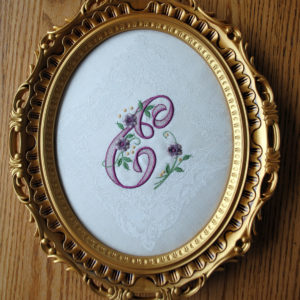
I used rayon on this design, Heirloom Alphabet by Artistic Designs. I wanted a bit of shine in the stitching to catch the light and complement the sheen of the damask linen upon which it was embroidered. Using a topper helped protect the linen and make the stitching pop.
Thread Weights
The smaller the number, the thicker the thread. So a 12 wt. thread of any variety is heavier than a standard 40 wt. or 50 wt.
Heavier threads are more reminiscent of hand embroidery, since they produce stitches that are similar to floss or perle cotton.
Heavier threads are more reminiscent of hand embroidery, since they produce stitches that are similar to floss or perle cotton.
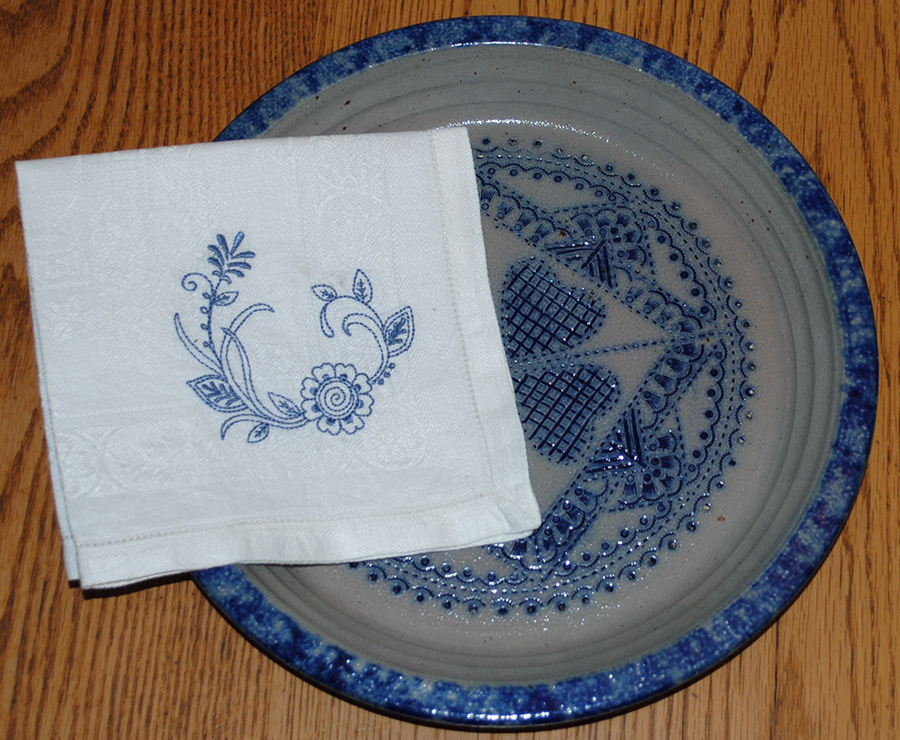
Redwork designs (and bluework, blackwork, etc.) will look as if they were embroidered by hand when stitched with a heavier thread. For this napkin, I used a 40 wt. polyester to keep the dainty lines clean and crisp. I also used the same color in the bobbin to keep the back pretty since it would likely be seen often.
Changing up your thread types and weights keep your vintage embroidery projects interesting.