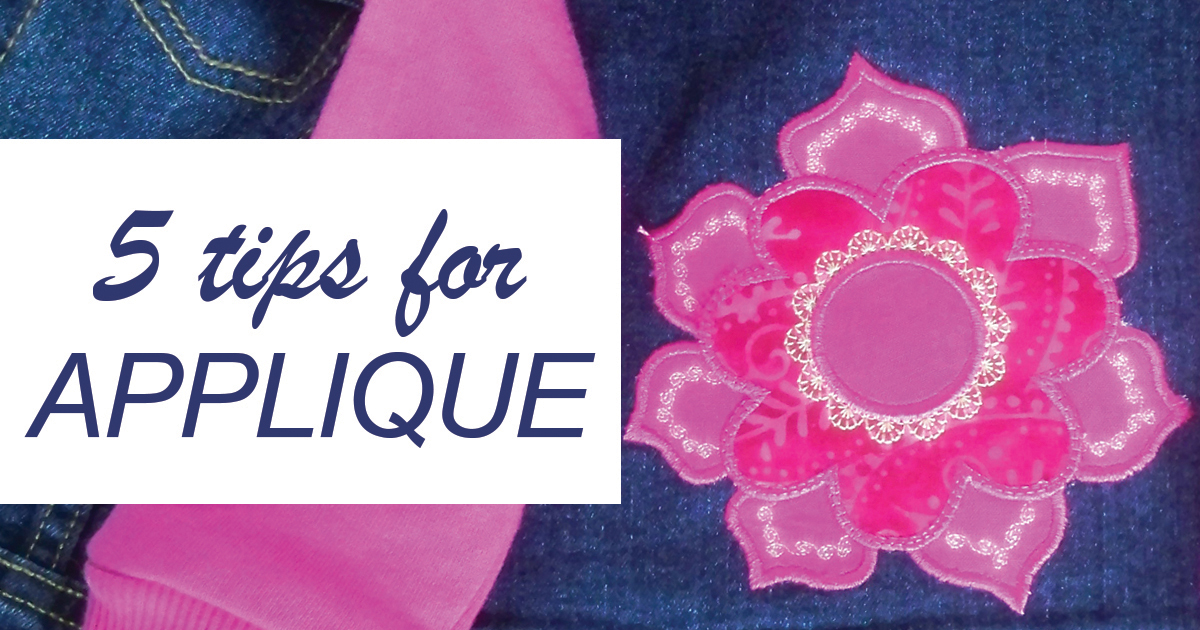
Computerized embroidery machines make applique a breeze. There is a little more to quality stitching than just pressing buttons. Here are five tips for creating the best applique projects possible!
Pre-Shrink Fabric
Before you begin applique, it is always important to pre-shrink project fabric. It is doubly important to do so when using applique designs. Natural fibers (rayon, silk, linen, cotton, wool) all reduce (shrink) at different rates when washed.
Man-made fibers may also reduce, although usually very slightly. If an applique fabric shrinks, the project fabric underneath it will pucker and wrinkle after the first washing.
Choosing Fabric for Your Applique
The sky is truly the limit when choosing fabrics for applique projects. The only fabrics to avoid are those that tend to ravel badly, such as satin-faced brocade.
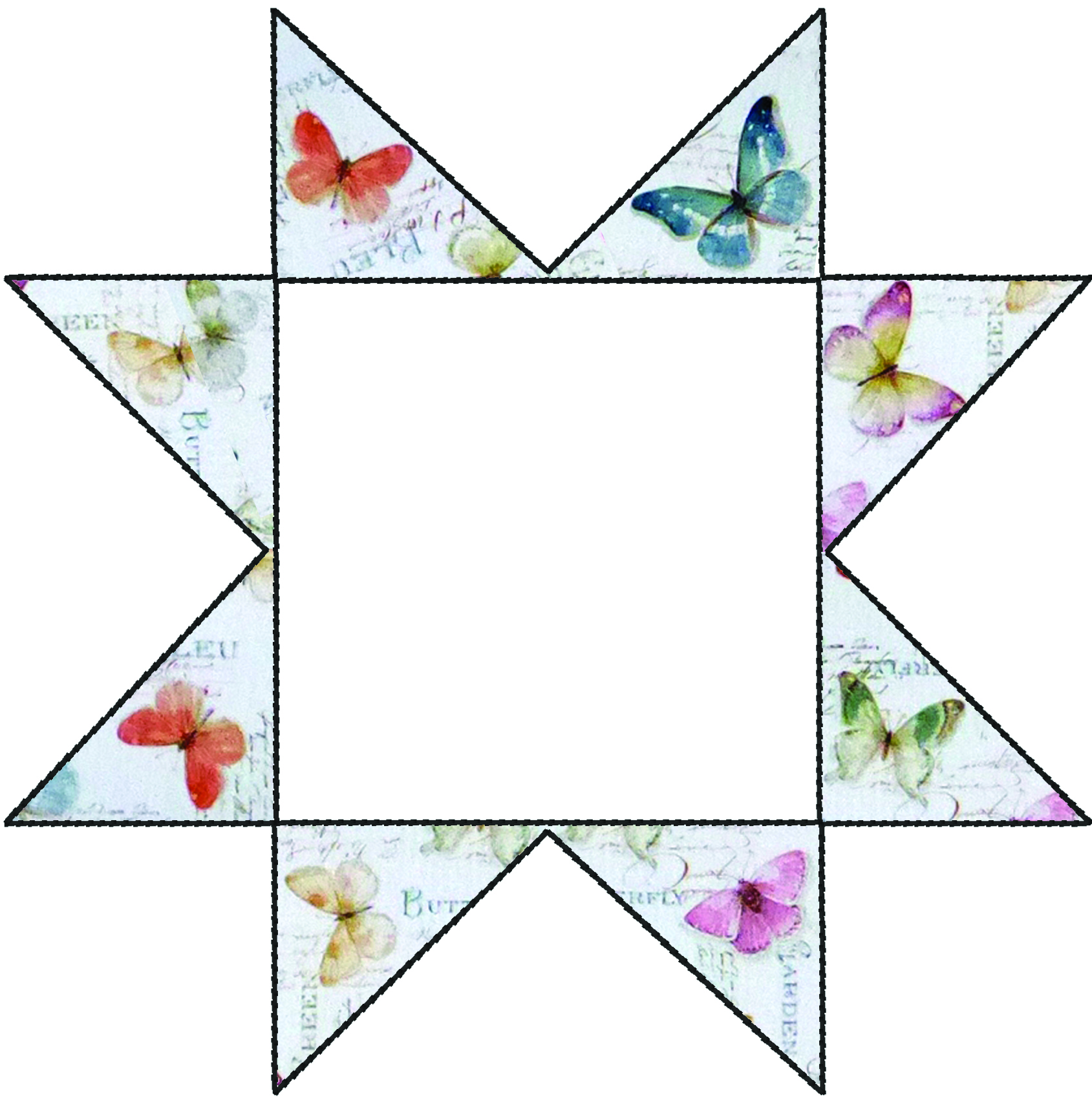
One of the joys of applique is that many different choices are available, often within the same piece of printed fabric. Small portions of printed fabric work great for fussy cutting applique shapes.
Layering sheer fabrics over other material will achieve interesting results. Give a plain cotton fabric a bit of glimmer by laying a piece of sparkle tulle or organza over it. Bold colors will be softened with a layer of chiffon or silk organza.
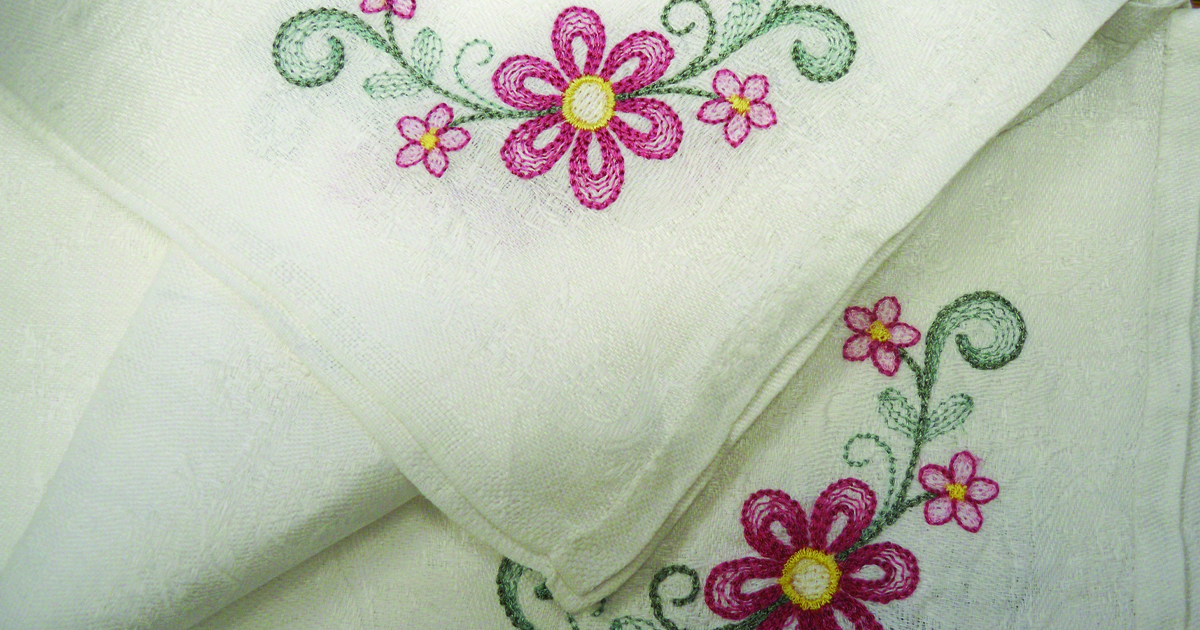
Thrift stores are great places to find unusual and unique fabrics for applique. Garments made from silk and other fine fibers are readily available at rock bottom prices. It doesn’t matter if the garment is un-wearable, the wrong size or just plain ugly! (Not to mention that it’s wonderfully therapeutic to whack up a garment with scissors on purpose!)
Fine leather, vinyl, plastic (such as flannel backed table cloths) fabric paper, wide ribbons, and woven trims all make great appliqué fabrics. Check out your linen and clothes closets. If you can’t use it, won’t wear it, and it is too good to throw away, give it a new life as an appliqué!
Fuse Applique to the Base Fabric
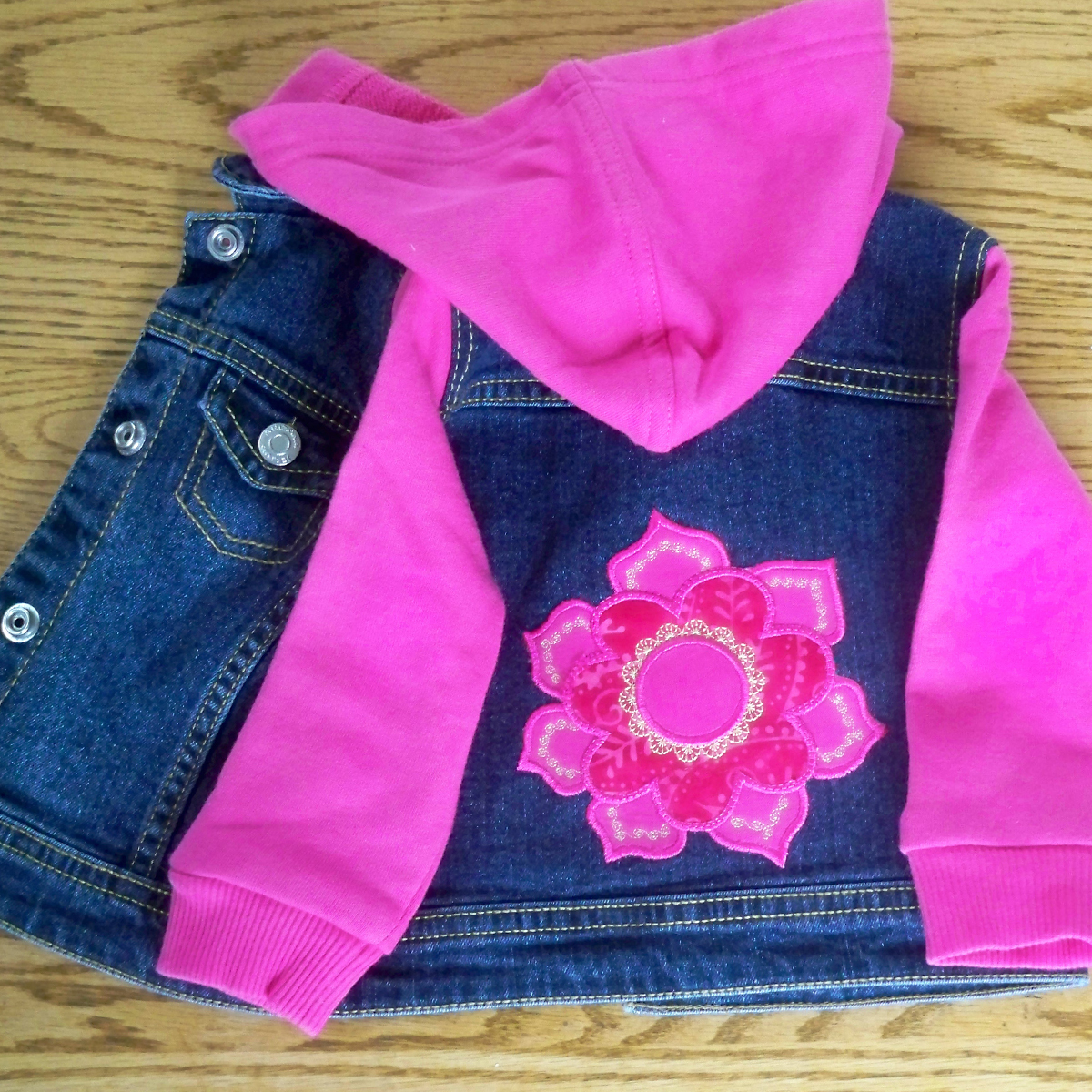
Applique designs (and their projects) will look better longer if the applique fabric is fused to the background material. This is easy to do using fusible webbing on the back of applique fabrics.
Fused applique fabric will not sag or wrinkle. Most fabric intended for applique should be backed with fusible webbing. Faux fur, vinyl, leather, fleece or any specialty fabric that will melt or crush during contact with heat should not be fused.

Fuse appliques after trimming close to the tack-down stitches and before stitching the final satin stitch edging. A mini-iron is ideal for fusing the applique fabric directly in the hoop. They work well with pressing quilting blocks and mug rugs too. Place the hoop on a hard, flat, heat-protected surface while trimming and fusing. It is a good idea to use a pressing cloth while ironing.
Interfacing
Back light-colored fabrics with fusible interfacing when stitching applique on dark backgrounds. Apply another layer of fusible web to attach the applique to the background fabric. This is also helpful when placing a light-colored applique over a darker-colored applique.
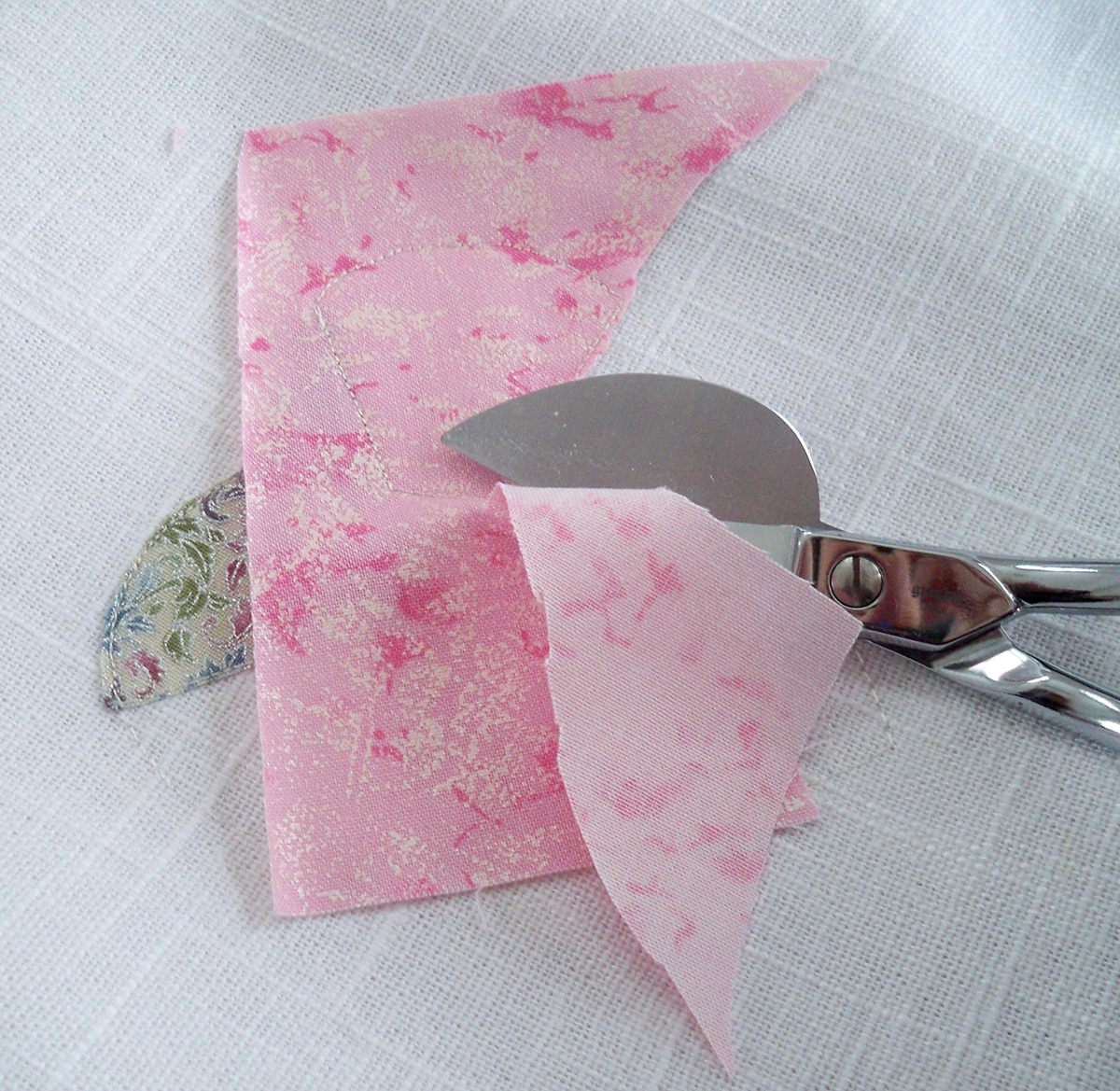
The Right Scissors
The right scissors make applique trimming a snap. Use duckbill applique scissors or small, sharp scissors with curved blades. The closer you get to the tack-down stitches, the cleaner your edge stitching will be on the applique.
What tips do you have for stitching applique designs?