Stitching on sheer fabrics, like bridal veils, is not for the faint of heart but these tips and tricks will help!
Perhaps no occasion is as special as a wedding. If you are embroidering a veil for the bride, here are some things to consider!
Fabrics
Typically, bridal veil fabrics include organza and tulle. Organza typically provides a delicate shimmer and is a bit less opaque than tulle which is sheer with a more open weave. Buy more material than you need to allow for test stitching.
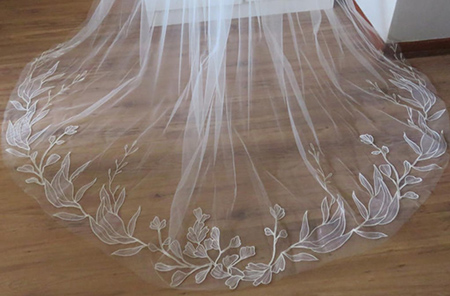
Ferris Leaves from Mar Lena Embroidery
You can also purchase a ready-made veil to embroider. Either way, it is a good idea to have enough fabric or a duplicate veil on hand in case of any stitching malfunctions.
Stabilizer
A fabric-type water-soluble stabilizer works best. Sandwich the fabric in stabilizer top and bottom. If stabilizer tears during embroidery, make a patch and continue.
Hooping vs Floating
Traditional hooping may mark delicate fabrics like organza and tulle unless you use a magnetic hoop. If you float, make sure to baste all layers of fabric and stabilizer in the hoop. That keeps layers from shifting and will help if your hoop pops apart during embroidery.
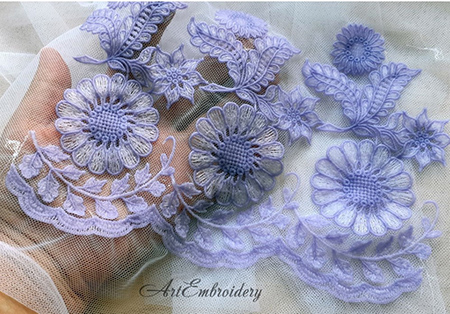
British Hat Veil from Art Embroidery
Needle and Thread
Larger needles mean bigger holes so use the smallest size needle possible. Since this is something that will not be laundered often, rayon, silk, and metallic threads can be used.
Templates
Templates are essential for positioning multiple designs. Many designs include placement marks and outline alignment stitches to help with placement.
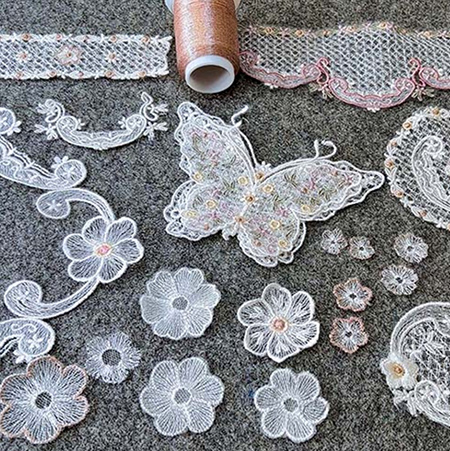
Rose Gold Bridal Lace from Graceful Embroidery, appliques stitched on tulle.
Freestanding Applique vs Freestanding Lace
Some designs can be stitched right on the fabric or while others are created as freestanding lace or freestanding applique and added to the fabric and existing embroidery. Temporary adhesives help keep everything in place.
If you happen to tear a hole in the fabric, just cover it with embroidery or a freestanding lace applique.