Blue Willow patterns have survived the test of time but the story behind them may come as a surprise!
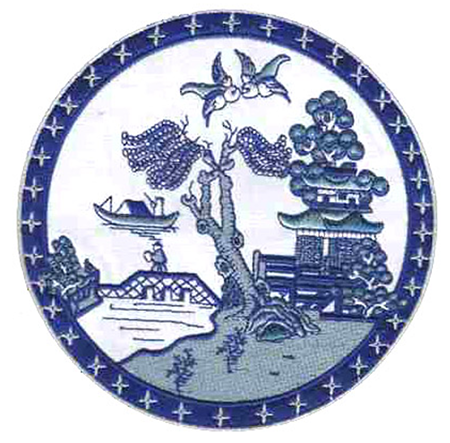
Blue Willow Collection 1 from Outback Embroidery
The continued success of Blue Willow china is based on one of the most brilliantly orchestrated marketing ideas in modern history.
Blue Willow Symbolism
Traditional Blue Willow pieces include two doves, a pagoda and apple tree, a fence, a bridge, willow tree, sail ship, and an island. The classic blue and white artwork is still quite popular today in home decor and even machine embroidery. See some of our Blue Willow designs here.
The Legend of Blue Willow
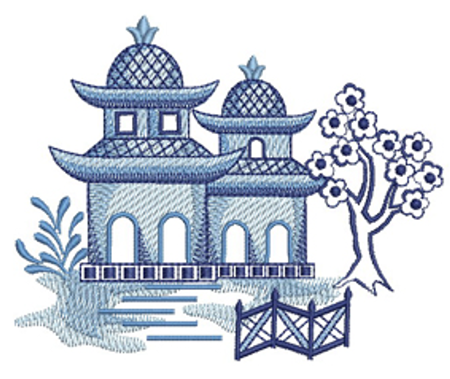
Blue Willow from Ace Points Embroidery
The Blue Willow backstory dates to the mid 1800s. Legend has it that the daughter of a wealthy Mandarin, whose father arranged her marriage to a wealthy merchant, fell in love with another. A fence was constructed to keep the young man out. The daughter could stroll only the gardens and bridges along the waterway.
One day, she received a poem from her love floated down the river in a shell. Eventually, the young lovers escaped and sailed to an island hideaway. Soldiers eventually found them and executed the young man. The daughter was so distraught she set fire to their home and perished.
Chinese gods were said to be so touched by the love story that they turned the young couple into doves to soar the skies for all eternity.
Sounds like your age-old love story, right? It was actually made up!
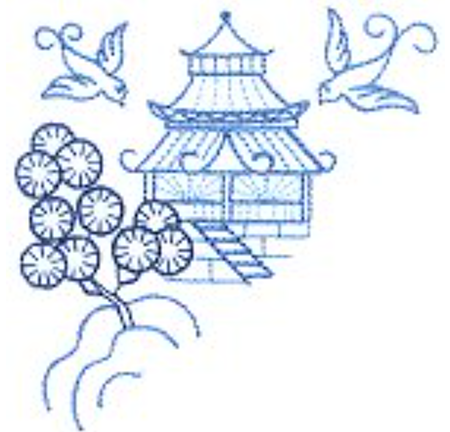
Blue Willow from Hatched in Africa
The Real Story
Blue Willow is not a Chinese pattern. It was created by Thomas Turner in England in 1779. Thomas Minton engraved the original pattern based on blue and white Nanking porcelain popular in Europe.
Turner also created the story as a marketing tool, making the pottery so popular that, by the end of the 18th century, several English potteries were manufacturing the pattern.